
A product demonstration can make sense to someone discovering your business. The same demonstration may leave a returning prospect’s main question unanswered: can you supply the right specification, within the delivery area, under acceptable order conditions?
To plan social media ads for different levels of audience familiarity, connect what you reasonably know about prior contact to the context each message needs to provide. Then choose a relevant next step and define how you will evaluate the response.
Familiarity is a planning hypothesis. A video view does not establish purchase intent, and a missing website record does not prove someone has never heard of you. The useful question is how much context the ad should supply without making assumptions the evidence cannot support.
Start with the business outcome and offer boundary
Define what the campaign should accomplish before dividing people into audience groups. You might need suitable quotation requests, completed purchases or relevant visits to a product resource. These outcomes require different evidence and different follow-up.
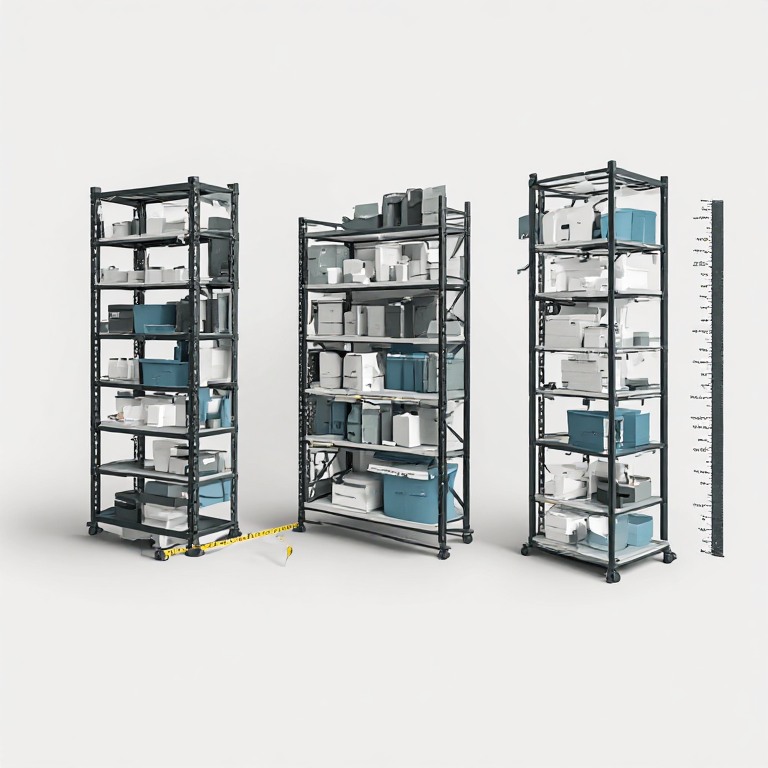
Consider a hypothetical Indonesian business selling modular display stands to small retailers. It can supply certain configurations within a confirmed delivery area. A useful inquiry needs enough information about dimensions, intended use and location for the team to assess suitability. This example illustrates planning decisions; it is not a documented campaign.
For this business, the operating objective could be:
Generate quotation requests for available display stands from retailers within the delivery area, with enough detail to assess product fit.
That objective applies across familiarity levels. What changes is the information someone may need before making a useful request. A newcomer may need to see what the product does. A returning prospect may need dimensions, ordering conditions or clarification about assembly.
Record the available offer, geographic coverage, destination and follow-up capacity. Audience planning cannot compensate for advertising configurations the business does not supply.
Separate familiarity from readiness to buy
Familiarity describes prior exposure or contact with the business. Purchase readiness concerns whether someone has a relevant need and is prepared to act. Keep both questions visible.
A first-time visitor could have an urgent requirement. A long-standing follower could enjoy your content without needing the product. A previous buyer may know the business well but have no reason to reorder.
Use the following groups as a working framework, adapting them to the evidence you actually have:
| Working group | Evidence you might have | Context the message may need | What the evidence does not establish |
|---|---|---|---|
| No recorded prior interaction | No matching interaction in the available records | What the offer is, who it serves and why it is relevant | That the person has never encountered the brand |
| Recorded engagement | An eligible content interaction or website visit | A clearer use case, product explanation or relevant detail | That the person understood the offer or intends to buy |
| Evaluation-related activity | Visits to ordering information or a recorded product inquiry | Specifications, conditions and answers to practical objections | That an order is imminent |
| Existing lead or customer | A maintained inquiry or purchase record | A suitable follow-up, complementary offer or pause in acquisition messaging | That another acquisition ad is appropriate |
These are communication groups, not a universal funnel everyone must pass through. Do not require people to consume introductory content before allowing them to request a quotation or purchase.
For the display-stand business, a newcomer ad can still include a quotation route. It should simply provide enough product context for the request to be informed.
Build an evidence map before creating audiences
For each proposed group, write down the signal, its source, its age and its limitations. “Warm audience” is too vague to guide delivery or interpretation.
A useful record might say: people with a recorded visit to the product-dimensions page during a defined period, excluding known completed buyers where the setup supports that exclusion. It should also explain why that visit is relevant to the proposed message.
Distinguish direct business records from behavioral clues. A received inquiry establishes contact. A page visit indicates recorded activity. Neither automatically establishes a qualified sales opportunity.
Platform tools can provide some of these inputs. For example, TikTok documents Custom Audiences based on customer files, website or app activity and engagement. Its documentation also describes their use for retargeting and customer exclusions. These are available audience-building mechanisms, rather than proof of a person’s understanding or intent. See TikTok’s Custom Audience guidance.
Before choosing a channel for a particular group, establish whether the necessary audience source is usable in your setup. Check the relevant platform’s current requirements, data permissions and account availability. A conceptual group in a planning document is not automatically a deliverable audience.
If reliable prior-contact data is unavailable, begin with messages that explain the offer clearly to a relevant eligible audience. Preserve “unknown familiarity” as an honest description instead of inventing precise segments.
Match the message to the missing information
The purpose of segmentation is to make a different communication decision. If two groups need the same explanation, destination and action, separate delivery may add little value.
For people with no recorded prior interaction
Make the offer understandable without previous brand knowledge. Show the product or service in a recognizable use case, identify who it serves and communicate any condition that materially affects suitability.

For the hypothetical display-stand supplier, the ad could show how a modular stand accommodates a small retail display. The accompanying copy could identify the available product category and invite viewers to examine configurations and dimensions.
Avoid opening with an unexplained brand slogan or a discount that leaves the product unclear. A direct purchase or inquiry invitation is appropriate when the ad and destination provide enough information to support it.
For people with recorded engagement
Add information rather than assuming the earlier interaction completed the explanation. Demonstrate a relevant feature, show available configurations or answer a recurring product question.
Someone who watched a display-stand video may still need to understand size, materials or assembly. Repeating the opening demonstration can be reasonable, but it should have a clear job. Do not make repeated exposure the entire communication plan.
Keep the ad self-contained. Copy such as “Here are the dimensions of our modular display range” works without implying that the advertiser knows exactly what the viewer previously watched.
For people evaluating the offer
Focus on the uncertainty that could prevent a suitable action. This may concern specifications, delivery coverage, order requirements or what happens after an inquiry.
The supplier could show which measurements a retailer should provide when requesting a quotation. Its destination should make those requirements easy to find and complete.
Use only supported claims. A returning audience does not justify invented urgency, delivery promises or customer testimonials. If you present proof, it needs a real basis and appropriate permission.
For existing leads and customers
Decide whether advertising has a useful role at all. Someone already discussing an order may need a direct response from the business. Another acquisition ad could introduce a conflicting offer or repeat a step already completed.
A complementary product message may be relevant after a purchase, while an immediate repeat-purchase request may be inappropriate for a durable product. Base the decision on the offer and buying cycle.
The detailed rules belong in planning retargeting exclusions for buyers and recent leads. At the planning stage, identify which completed actions should change the message or remove someone from an acquisition audience.
Choose the destination and campaign objective together
The next step should continue the ad’s promise. An introductory product demonstration needs a destination that explains the demonstrated offer. A specification message should lead to accessible specifications. A quotation invitation should explain what information the business needs.
Before selecting a platform objective, record the business outcome and the action you can reliably observe. Then choose an available objective and optimization event that fit the job, using current platform documentation where necessary.
Do not automatically assign awareness objectives to unfamiliar audiences and sales objectives to familiar audiences. Familiarity alone does not determine the campaign’s purpose. A newcomer campaign can pursue purchases when the offer and measurement support that decision.
Equally, engagement should not be treated as evidence of sales simply because the audience is described as warm. If the campaign is intended to generate qualified inquiries, preserve that outcome in the evaluation plan even when intermediate interactions help diagnose results.
Create only the separation you can use
A planning matrix does not require one campaign per row. Separate delivery when it enables a meaningful difference in spending control, messaging, exclusions or interpretation.
For a small operation, one acquisition campaign with clear introductory creative and a carefully justified follow-up audience may be more manageable than several narrowly divided groups. If the follow-up audience cannot be used under platform requirements, retain the message plan without pretending that delivery is possible.
The choice between broad and narrow targeting is a related decision with its own constraints. Use Broad or Narrow Social Ad Audiences: How to Choose a Starting Approach for the deeper comparison. Here, the question is whether each proposed separation changes what you will do.
Record audience membership and exclusions explicitly. If a person could qualify for several groups, decide which communication takes priority where the selected setup allows that control. Otherwise, acknowledge the overlap when interpreting reports.
Allocate spending around a decision
Avoid universal budget percentages for unfamiliar and familiar audiences. A fixed split ignores the size of the usable groups, the available offer and the amount the business can spend learning.
For each proposed allocation, state what you need to learn and what you will do with the answer. You might assess whether an introductory demonstration attracts suitable inquiries, or whether a specification message addresses a recurring question among returning visitors.
Agree a spending boundary and observation period that reflect the business’s capacity and follow-up process. Do not keep adding budget to a small returning audience simply because its reported acquisition cost looks attractive.
Repeated exposure is a reason to inspect delivery, creative and response together. It is not a diagnosis by itself. A familiar audience may have seen the message without needing another purchase, or the message may still leave its practical question unanswered.
Measure outcomes without overstating the comparison
Use a consistent definition of the business outcome across groups. If qualified inquiries matter, document the qualification rule and how the business records it. A form submission and a qualified inquiry should retain different names.
Keep outcome volume, spend and inquiry quality visible alongside cost metrics. Record the reporting period, attribution settings and source of each measure. The existing guide to building a paid advertising measurement plan explains how to connect campaign reports with business records.
Do not treat a lower reported cost among returning visitors as proof that retargeting caused more sales. These people entered the comparison with different prior contact, and some may have acted without the additional ad. A descriptive report can guide investigation without establishing incremental impact.
When a message produces a promising result, identify the next question precisely. Did the product explanation attract suitable prospects? Did the quotation instructions reduce incomplete inquiries? A structured approach to planning an ad creative test around one clear campaign objective can help turn that uncertainty into a useful comparison.
Put the audience plan into a usable brief
Bring the decisions together in a short brief that someone producing creative, configuring delivery and handling inquiries can interpret consistently:
- Outcome and offer: what the business needs and what it can fulfill.
- Audience evidence: the available signal, its source, recency and limitations.
- Communication job: what the person needs to understand before the next action.
- Message and destination: the supported promise and the page or contact route that continues it.
- Delivery conditions: usable audience controls, overlap, exclusions and spending boundaries.
- Measurement: the outcome definition, reporting source and decision the evidence will support.
For the hypothetical display-stand supplier, the newcomer brief might emphasize product use and fit, while the evaluation brief emphasizes dimensions and quotation requirements. Both serve the same business objective; each supplies a different piece of missing information.
Before adding another audience group, ask what you would communicate or manage differently. If the answer is unclear, refine the existing message first. Familiarity becomes useful when it changes a practical decision.
Catatan tentang konteks
Performance advertising dipengaruhi oleh objective, audience, offer, creative, measurement, budget, market, dan faktor bisnis lainnya. Gunakan contoh sebagai alat berpikir, bukan jaminan hasil.
Catatan tentang Platform
Advertising platform dapat mengubah interface, fitur, terminology, targeting options, policies, dan measurement systems. Jika artikel ini membahas detail platform-specific, verifikasi setting atau requirement terbaru melalui dokumentasi resmi sebelum menerapkannya pada campaign aktif.
Related guides

When Should You Exclude a Social Ad Placement?
A weak placement row is a reason to investigate, not always a reason to exclude. Use creative compatibility, business constraints and outcome…

How to Read Social Ad Placement Breakdowns Without Overreacting to Small Samples
A placement with the lowest CPA may have only one conversion behind it. Learn how to read uneven delivery, test the sensitivity…

Automatic or Manual Social Ad Placements: How to Choose a Starting Setup
Choose placement flexibility when your assets and measurement can support it. Use manual restrictions when you have a specific delivery requirement or…