
Someone clicks an ad offering custom printed boxes with clear minimum-order requirements. The destination opens with a company history, a gallery of unrelated packaging and a general contact button. The supplier may have exactly what the buyer needs, but the page makes that buyer reconstruct the offer.
To match a search ad promise to its landing page, carry the same customer task, offer, essential conditions and next step through the click. The wording can change. The expectation should remain recognizable.
This work starts after you have identified a relevant search theme. For the wider campaign framework, see how to plan search ads around customer intent. Here, the narrower decision is whether the destination delivers what a particular ad leads someone to expect.
Turn the ad into a concrete promise
Read the ad as a prospective customer would. What would someone reasonably expect to find after clicking? Include implications created by the headline and call to action, rather than recording only the product name.
Write a short working statement:
For someone trying to accomplish this task, the ad offers this option, under these conditions, and invites this next action.
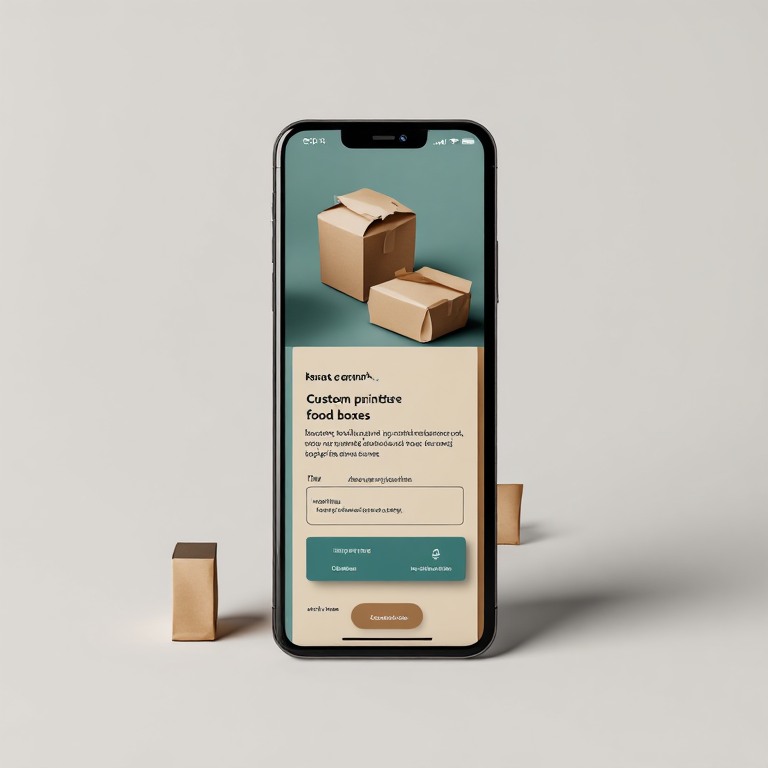
Consider a hypothetical Indonesian packaging supplier advertising custom printed food boxes. Its promise might be: “Explore our custom printed food boxes, understand the minimum-order conditions and request a quotation for your requirements.” This is an illustrative business, not a documented campaign.
That statement creates several obligations for the destination. The page needs to show the relevant boxes, explain applicable order requirements and provide a usable quotation route. A page about packaging in general would leave part of the promise unanswered.
Modifiers matter. Words such as “ready stock,” “custom,” “free,” “same-day” and “Jakarta delivery” introduce specific expectations. Use them only when the offer supports them, and make their conditions easy to find.
Google’s unavailable offers policy prohibits advertising products, services or promotional offers that are unavailable or cannot easily be found at the destination. Treat the advertised offer as something the page must substantiate, rather than a hook that disappears after the click.
Put the offer where the visitor can recognize it
The opening screen should help a visitor answer three questions: am I in the right place, is this relevant to my requirement, and what can I do next?
Use a heading that identifies the actual offer. Follow it with a concise explanation of who or what it serves, any condition that materially affects suitability, and a clear next action. Give supporting detail enough space below; the opening does not need to contain the entire sales explanation.
For the hypothetical supplier, “Custom Printed Food Boxes” would establish relevance more directly than “Packaging Solutions for Every Business.” A short introduction could then explain the available box types and how to request a quotation, with the actual minimum-order requirement visible nearby.
Do not copy ad text mechanically. A short search ad may omit details the page needs to explain. The destination should expand the promise while preserving its meaning. If the ad invites visitors to compare materials, opening with an unexplained order form skips the decision they came to make.
Google describes landing-page experience in terms that include the relevance and usefulness of information, navigation and expectations created by the clicked ad. See its landing page guidance. Repeating a keyword alone does not address those considerations.
See others: How to Define an Editorial Promise for Brand Media
Map each promise to visible support
A simple working table can reveal where the page needs a specific answer. The examples below are hypothetical; they are not recommended claims for every supplier.
| Ad promise | What the destination needs to support | Potential mismatch |
|---|---|---|
| Custom printed food boxes | Relevant products, customization options and quotation requirements | A catalogue of unprinted stock containers |
| See minimum-order requirements | Clear quantities and any differences between products | Requirements disclosed only after an inquiry |
| Compare available materials | Meaningful differences between materials actually offered | A single product image and a sales form |
| Request a quotation | An identifiable request route and explanation of required details | A button that opens an unrelated catalogue |
| Delivery to a named area | Actual coverage and important delivery conditions | Broad location claims with unclear fulfillment limits |
For each row, identify where the answer appears and whether a visitor can understand it without guessing. Evidence can include accurate specifications, relevant product images, clearly explained conditions or a description of the quotation process.
Keep the evidence proportionate to the claim. A product photograph can illustrate appearance; it cannot establish a production deadline or prove suitability for every use. Avoid adding unsupported badges, certifications or performance claims to make the page seem more convincing.
If a material condition weakens an appealing headline, revise the headline. Burying the condition farther down the page leaves the expectation unresolved.
Make the next action fulfill the invitation
A call to action should describe what happens next. “Request a quotation,” “View available sizes” and “Compare materials” represent different tasks and can require different destinations.
If the ad offers a quotation request, the page should explain what information is needed to prepare one. For the packaging example, that might include dimensions, quantity, printing requirements and delivery location, provided those details are genuinely used by the business.
Ask for information that serves the next step. A long form may be justified for a complex specification, but unexplained fields can make the request difficult to complete. Brief guidance beside an unfamiliar field can be more useful than another promotional paragraph.
A WhatsApp route can be appropriate when the business actually handles inquiries there. Label it accurately, explain what the visitor should send and avoid implying an immediate quotation if a staff member must first assess the requirement. A click that opens a conversation is not proof that a qualified inquiry was received.
Follow the destination through on a phone as well as a larger screen. Look for practical obstacles: a button covered by another element, unreadable conditions, an unsuitable form or an unexpected change of language. If the ad uses Bahasa Indonesia, preserve a comprehensible language experience through the page and inquiry route.
Decide whether to change the ad or the page
When the promise and destination diverge, choose the change that reflects the actual offer and the team’s ability to maintain it.
If the page accurately describes the business but the ad exaggerates availability, narrow the ad. If the promise is valid but useful information is missing, improve the page. If an existing product or category page already answers the task, consider using that destination instead of creating another page.
A dedicated landing page becomes useful when a search theme needs meaningfully different information or a different next action. For example, ready-stock purchases and custom manufacturing inquiries may need separate experiences because their availability, conditions and order processes differ.
Separate pages also create maintenance work. Product details, order requirements and promotions can drift apart across versions. Several ads can reasonably share a page when they make compatible promises and that page answers their common task clearly.
If visitors arrive looking for an offer the business does not provide, changing page copy will not resolve the underlying traffic problem. That belongs in reviewing search terms before adding negative keywords.
Measure the outcome the promise was meant to produce
Define a useful response before interpreting results. For a quotation campaign, distinguish a button click from a submitted request, and a submitted request from one the business can actually serve.
Read those outcomes alongside the relevant search theme, ad message, destination and observation period. An increase in inquiries can still leave the business with more unsuitable requests if the page makes important conditions less visible.
When testing a change, state the hypothesis plainly. For example: “Making minimum-order requirements visible beside the quotation invitation may help visitors judge suitability before submitting.” The desired result is better-informed inquiries, which may involve a trade-off in total inquiry volume.
Where practical, keep other major elements stable so the result is easier to interpret. Record simultaneous changes to targeting, offers, bidding or tracking. A difference observed during a busy promotional period does not establish that revised page copy caused it.
If results remain weak, investigate the wider journey: query relevance, offer suitability, technical usability, measurement and lead handling. Message alignment addresses one part of that journey; it cannot establish demand or guarantee campaign performance.
Before committing more traffic to a destination, be able to explain the connection in one sentence: the visitor searched for this, the ad promised this, and the page makes that promise understandable and actionable. Any gap in that sentence points to a concrete decision about the offer, message or destination.
Catatan tentang konteks
Performance advertising dipengaruhi oleh objective, audience, offer, creative, measurement, budget, market, dan faktor bisnis lainnya. Gunakan contoh sebagai alat berpikir, bukan jaminan hasil.
Catatan tentang Platform
Advertising platform dapat mengubah interface, fitur, terminology, targeting options, policies, dan measurement systems. Jika artikel ini membahas detail platform-specific, verifikasi setting atau requirement terbaru melalui dokumentasi resmi sebelum menerapkannya pada campaign aktif.
Related guides

How to Check Search Ad Location Settings When Traffic Comes from Unexpected Areas
Unexpected locations do not automatically mean your search campaign ignored its targeting. Separate customer location, location interest and reporting differences, then make…

Search Impression Share Lost to Budget or Rank: What to Check Next
Missed Search impressions can point to insufficient budget or weak auction competitiveness. Learn what each diagnosis supports, what it leaves unresolved, and…

Low Search Volume or Low Impression Share: Which Problem Are You Facing?
Few impressions can mean a small search opportunity, a low share of available opportunities, or both. Here is how to distinguish them…