
A campaign has used more than half its budget, but fewer than half its scheduled days have passed. Reducing the daily budget might protect the remaining allocation. It might also interrupt an intentional period of heavier delivery. The spending total alone cannot tell you which interpretation fits.
Checking campaign budget pacing means comparing actual spending with the approved spending schedule, then calculating what the remaining money can support. Do that before deciding whether the platform’s daily budget setting needs to change.
Establish the budget boundary and reporting cutoff
Start with the approved media allocation, delivery dates and spending limit. Keep creative production, tracking work and other costs separate unless the campaign’s spending record explicitly includes them. An uncommitted reserve is not part of the available media budget.
If those boundaries are unclear, return to the framework for setting a paid advertising test budget with clear decision limits. Pacing manages an existing commitment; it should not quietly expand that commitment.
Next, choose one reporting cutoff. Use the same account time zone, currency, campaign scope and cost definition throughout the calculation. Comparing spend through Tuesday evening with a plan through Wednesday evening creates a misleading gap.
Completed delivery days are usually a clearer starting point than a partly reported current day. If you include today, record the cutoff time and treat the comparison as provisional. Check whether the report has updated through that point rather than assuming every displayed total is final.
Also identify which campaigns share the allocation. A campaign can appear comfortably within its own plan while several campaigns together approach the business’s total limit.
Compare actual spending with the planned curve
For a deliberately even spending plan, calculate:
Planned spend to date = total media allocation × elapsed delivery days ÷ total planned delivery days.
Then calculate:
Pacing ratio = actual spend to date ÷ planned spend to date.
A ratio above 1 means spending is ahead of that plan; below 1 means it is behind. Neither result establishes whether campaign performance is acceptable.
Consider a hypothetical Indonesian business with IDR 6,000,000 allocated across 20 delivery days. At the end of day 8, the even-spend plan calls for IDR 2,400,000. Actual spend is IDR 3,000,000.
| Pacing measure | Hypothetical calculation | Result |
|---|---|---|
| Planned spend through day 8 | IDR 6,000,000 × 8 ÷ 20 | IDR 2,400,000 |
| Actual spend through day 8 | Campaign spending record | IDR 3,000,000 |
| Difference from plan | IDR 3,000,000 − IDR 2,400,000 | IDR 600,000 ahead |
| Pacing ratio | IDR 3,000,000 ÷ IDR 2,400,000 | 1.25, or 125% of plan |
These numbers illustrate arithmetic, not a recommended budget or intervention threshold. Being 25% ahead of plan is a reason to investigate; it is not a universal instruction to reduce spend by 25%.
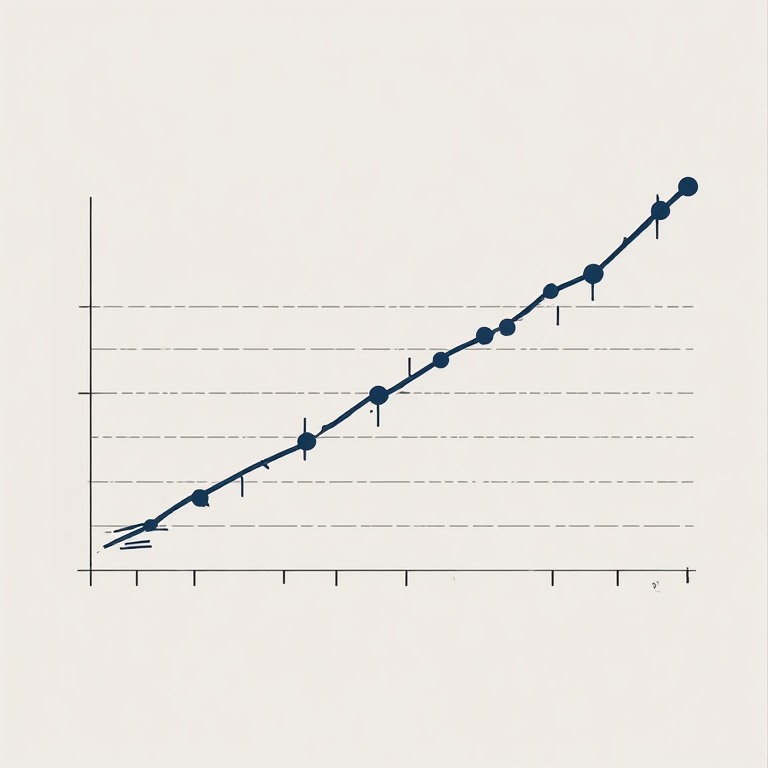
An even-spend calculation is unsuitable when the approved schedule deliberately concentrates spending around particular days or phases. In that case, add the planned daily allocations through the reporting cutoff and compare actual spending with that total. Count scheduled delivery days consistently, including any planned pauses.
Calculate what the remaining allocation can support
The next question is forward-looking: how much can you spend across the remaining delivery period without exceeding the approved allocation?
Remaining allocation = total media allocation − actual spend to date.
Remaining average spending allowance = remaining allocation ÷ remaining delivery days.
In the example, IDR 3,000,000 remains for 12 delivery days. That leaves an average spending allowance of IDR 250,000 per delivery day, compared with the original planning average of IDR 300,000.
A simple projection can show the consequence of continuing the recent pace:
Projected final spend = actual spend to date + recent average daily spend × remaining delivery days.
Suppose the last four completed delivery days averaged IDR 350,000. Continuing at that rate for 12 more days would produce projected final spending of IDR 7,200,000: IDR 3,000,000 already spent plus IDR 4,200,000 in further spending.
That is a scenario, not a forecast. Its usefulness depends on whether those four days resemble the remaining period. A promotion, pause or recent settings change could make them unrepresentative. State the observation period beside the projection.

If the remaining allocation is zero or negative, do not calculate a positive catch-up allowance. Apply the agreed spending boundary and establish whether any further commitment has been authorized.
Diagnose the gap before editing the budget
Separate three questions: is spending on schedule, is delivery functioning, and are the outcomes worth funding?
When spending is ahead, inspect the daily breakdown and change history. Was the increase concentrated on one day? Did someone raise a budget, add a campaign or extend the schedule? Was heavier delivery already part of the plan? Those explanations call for different responses.
When spending is behind, check whether the campaign is active and eligible to deliver. Look for payment or approval issues, unintended scheduling restrictions and targeting or bidding constraints. Increasing the daily budget does not directly resolve a paused campaign or an unavailable ad.
Use delivery diagnostics to investigate the cause rather than assuming the budget is the bottleneck. Likewise, avoid changing targeting, bids, creative and budget together simply to recover the planned spending total. That makes the effect of each decision harder to interpret.
Performance belongs beside this diagnosis, with its reporting limitations visible. A low spending total does not justify buying more traffic if the offer, destination or inquiry quality is already causing concern. Use the outcome definitions in your paid advertising measurement plan to keep a messaging click, received inquiry and qualified lead distinct.
Recent outcomes may also be incomplete. Google Ads describes conversion delay as the time between an ad click and a subsequent conversion in its bidding guidance. Allow for the campaign’s observed outcome and qualification timing when interpreting recent performance. You can enforce a spending boundary while waiting for existing outcomes to mature.
Translate the allowance into platform controls
The remaining average allowance is a planning figure. Check how the platform’s budget setting controls delivery before entering that number.
For example, Google Ads documents a daily spending limit of twice the average daily budget for most campaigns, with exceptions. An average daily budget therefore does not function as a strict same-day cap. Consult the current Google Ads spending-limit documentation for the campaign type involved.
Timing matters when reducing a budget, too. Google explains that, for most campaigns, the daily spending limit on a budget-change day uses the highest average daily budget selected that day. Lowering the setting does not replace that rule with twice the new, lower figure. See how budget changes take effect.
For a short campaign, keep the business’s remaining allocation separate from platform billing limits. Record who monitors aggregate spending, when they check it and who can pause delivery. Leave intervention room for reporting visibility and response time; no single buffer suits every account.
Choose the action that fits the cause
Use the pacing calculation to frame the decision:
- Ahead of plan, with the spending boundary at risk: reduce delivery or pause under the agreed authority. Strong early results do not automatically authorize extra funding.
- Behind plan because delivery is blocked: address the specific eligibility or setup problem before treating budget as the solution.
- Behind plan with functioning delivery: decide whether the remaining opportunity is worth funding. Unspent allocation does not have to be exhausted.
- Within the planned curve: retain the setting unless performance, measurement or another operating constraint gives you a separate reason to act.
If a deadline makes catching up impractical, record the likely underspend. Extending the campaign or increasing its total allocation requires a separate decision rather than an arithmetic adjustment.
Before making a change, write a short decision note: the reporting cutoff, actual spend, remaining allocation, remaining delivery days, diagnosed cause, selected action and next observation point. If you retain the setting, record that decision too.
A useful budget edit has a clear explanation: what spending risk or delivery constraint it addresses, how it fits the remaining commitment and what evidence will inform the next decision.
Catatan tentang konteks
Performance advertising dipengaruhi oleh objective, audience, offer, creative, measurement, budget, market, dan faktor bisnis lainnya. Gunakan contoh sebagai alat berpikir, bukan jaminan hasil.
Tentang Contoh Performance
Angka dalam contoh digunakan untuk membantu menjelaskan konsep. Hasil aktual dapat berbeda berdasarkan market, audience, offer, creative, budget, measurement, dan faktor lain yang memengaruhi campaign. Contoh tidak dimaksudkan sebagai benchmark universal atau jaminan hasil.
Related guides

How to Diagnose a Campaign Performance Drop Before Changing Settings
A performance drop can begin with delivery, traffic, the customer journey or measurement. Use a structured comparison to locate the change before…

How to Use Contribution Margin to Set an Advertising Acquisition Cost Limit
Revenue does not tell you how much you can spend to acquire a customer. Build a media acquisition ceiling from contribution before…

How to Set a Paid Advertising Test Budget with Clear Decision Limits
A useful advertising test budget defines what you can spend, what you need to learn and what happens when the evidence remains…